
From the sacred geometry of Machu Picchu at dawn to the flamingo-pink shores of Lake Titicaca and the kaleidoscopic textile markets of Pisac, a photography tour Peru places the world’s most extraordinary visual material directly in front of your lens — and behind your eyes.
There is a quality of light in Peru that photographers describe in almost reverential terms. It arrives sideways at altitude — clear and relentless above the clouds, golden and long at the margins of the day — falling on landscapes and faces and ancient stones with an intensity that makes every frame feel like something earned. Peru is not a country that tolerates the passive photographer. It demands presence, patience, and a willingness to rise before dawn and stay past sunset, because the light that makes a Peruvian photograph extraordinary does not linger for those who sleep in.
A photography tour in Peru is among the most rewarding specialist travel experiences in the world. The country’s visual range is almost implausible in its scope: Inca ruins emerging from cloud forest, reed islands floating on the world’s highest navigable lake, Amazon tributaries reflecting unbroken canopy, colonial plazas where conquistador architecture faces Andean mountain ranges, and indigenous markets blazing with textiles dyed in colors that appear to have no equivalent in the natural world — yet were derived entirely from it. For the photographer seeking a single country that delivers multiple lifetimes of subject matter, Peru stands without equal.
What Makes Peru Exceptional for Photography
Peru’s photographic appeal rests on a rare convergence of factors that few destinations can match simultaneously. Its geography spans three utterly distinct worlds — the narrow Pacific coastal desert, the soaring Andean highlands, and the vast Amazon basin — each with its own quality of light, its own palette, its own ecosystem of subjects. Its human culture is equally diverse: Quechua and Aymara indigenous communities maintain living traditions of weaving, ceremony, and agriculture that have endured for centuries, offering portrait and documentary photographers a depth of subject matter both visually extraordinary and humanly profound.
Add to this the unparalleled concentration of Inca and pre-Inca archaeological sites — Machu Picchu, Ollantaytambo, Pisac, Moray, the Nazca Lines, Chan Chan — and Peru becomes not merely a photography destination but a photography education: in light, in composition, in the relationship between landscape and the civilizations that shaped it.
“A photography tour in Peru teaches you things about light, patience, and human presence that no workshop can replicate. The country is the curriculum.”
The Iconic Photography Locations
Every photography tour Peru anchors itself around a set of locations that represent the country’s visual pinnacle. Each rewards not just a single visit but repeated return — at different hours, in different seasons, under different weather — because Peru’s landscapes are never quite the same twice.
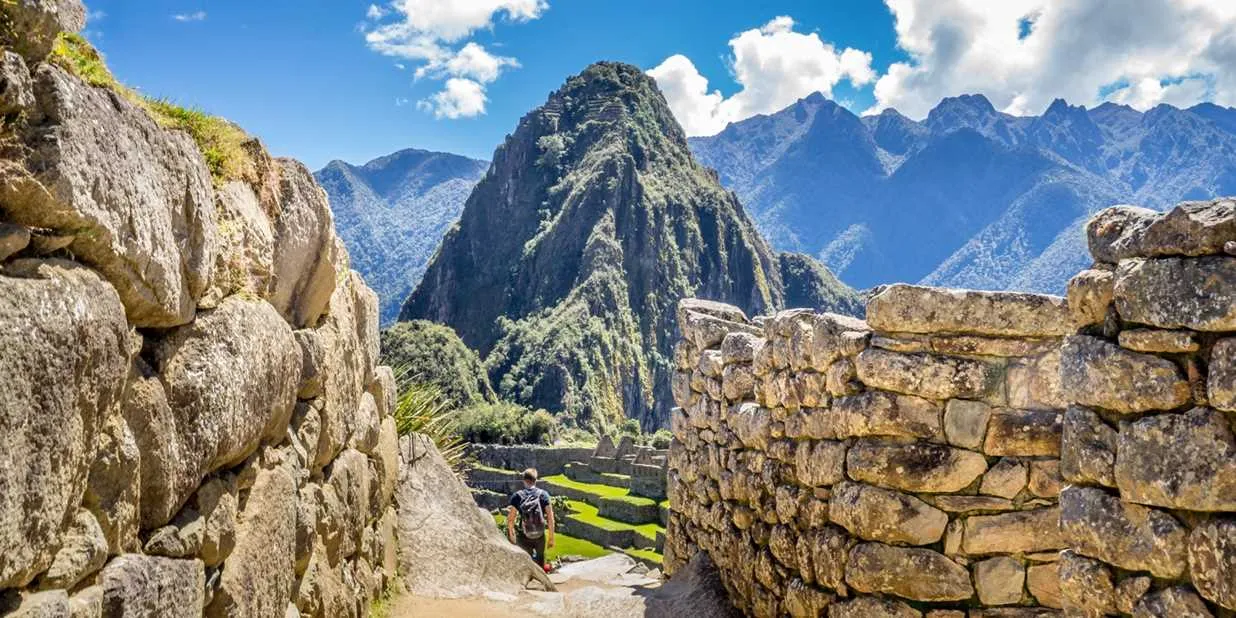
Machu Picchu
GOLDEN HOUR · MIST · DAWN
Arrive before gates open for mist-wreathed ruins in pure morning light. The Sun Gate at dawn offers an elevated perspective no tourist crowd can diminish.
Lake Titicaca
BLUE HOUR · PORTRAIT · LIFESTYLE
The Uros floating reed islands and Taquile Island offer portrait and lifestyle photography of rare intimacy — a culture that has changed little in centuries.
Sacred Valley
MARKET · TEXTILE · LANDSCAPE
Pisac market on Sunday mornings explodes with color. The valley itself — terraced Inca fields below snow peaks — is a landscape photographer’s masterclass in scale.
Cusco
NIGHT · ARCHITECTURE · STREET
Plaza de Armas at twilight, Inca stonework in the San Blas quarter, and the rooftop views over terracotta and Andean sky make Cusco a street photographer’s paradise.
Amazon Basin
WILDLIFE · MACRO · RAINFOREST
The Manu and Tambopata reserves harbor extraordinary biodiversity — macaws, tapirs, caimans, and canopy birds — for wildlife photographers willing to go deep.
Nazca & Colca Canyon
AERIAL · CONDOR · DESERT
Aerial photography of the Nazca Lines and condor encounters at Colca Canyon — the world’s deepest — represent two of Peru’s most singular photographic opportunities.
Understanding Peru’s Light
Professional photographers consistently identify light as the defining variable in Peru’s visual landscape. At altitude — Cusco sits at 3,400 meters, Machu Picchu at 2,430 meters — the atmosphere is thinner, ultraviolet radiation is more intense, and the quality of directional light is noticeably different from lower elevations. Shadows are deeper. Colors are more saturated. The golden hour lasts longer and arrives more dramatically than almost anywhere else in the world.
BLUE HOUR
30 min before sunrise — mist on ruins, mirror-still lake surfaces
GOLDEN HOUR
First and last 45 min of daylight — stone, skin, and mountain glow
OVERCAST
Ideal for portrait and textile photography — soft, shadowless, saturated
NIGHT SKY
Altitude + zero light pollution = Milky Way photography of exceptional clarity
The rainy season (November through March) brings dramatic cloud formations, vivid green landscapes, and the possibility of Machu Picchu shrouded in low cloud — a photographic gift, if you dress for it. The dry season (May through September) delivers reliable clear skies, crisp Andean air, and the brilliant blues that define the classic Peru travel image. Both seasons offer compelling photography; they simply demand different approaches and different expectations.
Portrait Photography and Cultural Access
Among the most distinctive offerings of a specialist photography tour in Peru is the access it provides to indigenous communities and living cultural practices. Market days in Pisac, Chinchero, and the communities around Lake Titicaca present opportunities for portrait photography of extraordinary richness — elders in handwoven textiles, children in ceremonial dress, weavers at work on backstrap looms, farmers driving llamas along ancient stone paths.
The ethics and etiquette of this photography matter enormously. A reputable photography tour operator will have established genuine, long-term relationships with communities — relationships built on fair exchange, respect, and the understanding that a portrait is not simply a beautiful image but a transaction between two human beings. The best portrait photographs from Peru are not taken; they are given, by subjects who feel seen rather than exploited. An experienced photography guide navigates this distinction with care, and the difference in the resulting images is immediately visible.
Essential Gear for a Photography Tour in Peru
Packing thoughtfully for a photography tour in Peru means accounting for the country’s extreme environmental range — from humid Amazon lowland to freezing Andean pass to dry coastal desert, sometimes within a single week’s itinerary.
Wide-angle zoom (16–35mm)Telephoto zoom (100–400mm)Fast prime (50mm f/1.4–1.8)Circular polarizer filterND filters (for waterfalls)Extra batteries × 3 minimumMemory cards × redundancyWeather-sealed camera bodyLightweight travel tripod
A circular polarizer filter is arguably the single most valuable optical accessory for Peru — cutting through the high-altitude atmospheric haze, deepening blue skies, and eliminating glare from the water surfaces of Titicaca and Andean lagoons. A weather-sealed camera body provides essential protection against the unpredictable rain of the cloud forest and the dust of the dry Andean plateau.
Planning Your Photography Tour in Peru
BEST SEASON
May–September (dry) · Nov–March (dramatic)
IDEAL DURATION
14–21 days for full coverage
Base cities
Cusco · Lima · Puerto Maldonado
GROUP SIZE
4–8 photographers ideal
ALTITUDE PREP
2 days acclimatization in Cusco minimum
MACHU PICCHU
Book entry tickets 3–6 months ahead
-
Always arrive at Machu Picchu on the first entry slot — gates open at 6am and the soft morning light lasts only an hour.
-
Hire a local photography guide, not a generic tour guide — the difference in compositional knowledge and community access is transformative.
-
Spend at least one full night at Lake Titicaca to capture the blue hour and early morning lake reflections.
-
Visit Pisac market on a Sunday for the largest gathering of indigenous vendors and the richest textile photography.
-
Acclimatize before shooting — altitude headaches and camera shake ruin otherwise perfect moments.
-
Ask permission before photographing people; the gesture itself — respectful, human — often produces the best portraits.
A photography tour in Peru is, in the end, a lesson in looking — truly looking — at a world so ancient, so varied, and so visually extraordinary that no single visit can exhaust it. The ruins will still be there tomorrow. The light will be different. And somewhere in that difference, in the patience to return and look again, is where the finest photographs of Peru are always waiting to be made.
