
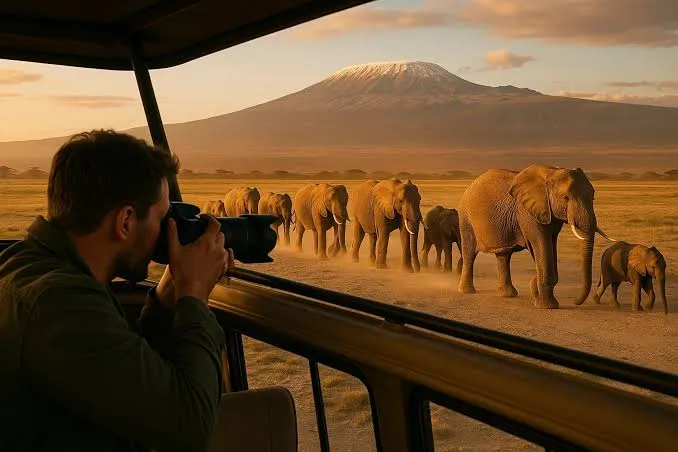
Few places let you watch large elephants feed on open plains with Kilimanjaro rising behind them. Amboseli is one of the best places in Kenya for that scene, and this guide explains why the herds stay so close to vehicles and when to visit.
Open Plains That Let You See Every Elephant
Unlike dense forests where elephants vanish into thick vegetation, Amboseli is dominated by open grassland, dry lake beds, and scattered acacia woodland. This openness gives visitors long, unobstructed sightlines, so herds can be spotted from far away and followed comfortably. Vehicles can position themselves at respectful distances without crashing through brush or disturbing the animals. The flat terrain also makes photography easier, since there are few branches or leaves blocking the frame. Guests often watch entire family groups feed, play, and travel together, which creates an immersive and deeply rewarding wildlife experience.
Famous Herds Accustomed to Vehicles
Amboseli’s elephants are among the most studied in the world, thanks to decades of continuous research on their family structures and behavior. Because they have grown used to safari vehicles over many generations, the herds act naturally even when cars are nearby. Mothers guide calves across tracks, matriarchs lead their relatives toward water, and young bulls test their strength in playful sparring. This calm tolerance allows guests to observe authentic behavior at close range, something rarely possible in parks where elephants are warier of people.
Kilimanjaro as a Natural Backdrop
Few wildlife scenes compare with an elephant silhouetted against the snowcapped summit of Kilimanjaro. Early mornings are particularly special, when clouds often lift and the mountain glows in soft golden light. Many Amboseli elephant safari tours are timed to catch this moment, placing guests near herds just as the sun rises over the plains. Photographers cherish the dramatic contrast between massive animals and the towering peak beyond. Even visitors without cameras remember the sight for years, because it captures the grandeur and tranquility of East Africa in a single frame.
Swamps and Waterholes That Draw the Herds
Fed by melting snow from Kilimanjaro, underground springs create permanent swamps in the middle of a dry landscape. These green wetlands attract elephants daily, especially during the hot months when other water sources disappear. Herds wade in to drink, bathe, and graze on lush vegetation, often moving within easy view of observation points and game tracks. Watching calves splash in the shallows is a highlight for many travelers. Birdlife, hippos, and buffalo also gather nearby, making these wetlands the richest and most photogenic wildlife stage in the entire park.
Best Seasons for Close Encounters
The dry seasons, from June to October and from January to February, offer the closest elephant viewing. With less rain, herds concentrate around the swamps and permanent water, making them easier to find and follow. Clear mornings provide sharp views of Kilimanjaro, while cooler temperatures keep game drives comfortable. The green season, from March to May and in November, brings fewer vehicles and lush scenery, though herds disperse more widely. Choosing your travel dates carefully helps match your priorities, whether those are photography, solitude, or reliable sightings.
Amboseli Among Kenya’s Top Attractions
Kenya offers countless wonders, from the Maasai Mara migration to Indian Ocean beaches, yet Amboseli stands out among the tourist attractions in Kenya for its unmatched elephant experiences. It is easily combined with other destinations, whether Tsavo, Nairobi, or Lake Naivasha, and its short flight or road access suits busy itineraries. Experienced guides understand elephant behavior and keep encounters safe and respectful, explaining family bonds and communication along the way. Visitors leave with deeper appreciation for conservation and a collection of photographs that few other parks can easily provide.
Last Word on Amboseli
Amboseli rewards anyone who arrives early, stays patient, and keeps an eye on Kilimanjaro. Allow at least two full days so the elephants have time to show you their routines.
