
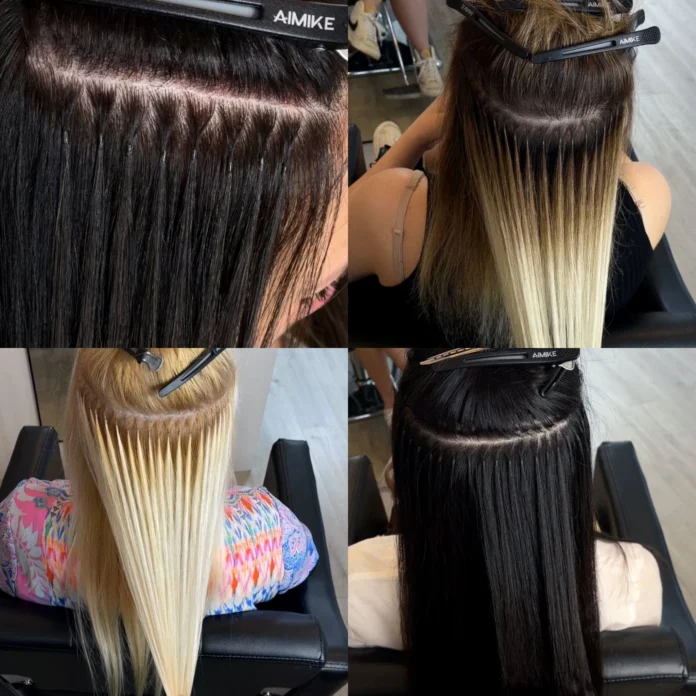
Keratin bond extensions — also known as K-tip or fusion extensions — are one of the most sophisticated and long-lasting hair extension methods available today. When installed correctly and cared for properly, they deliver results that are virtually indistinguishable from natural hair, moving and behaving exactly as your own hair would. But like any premium beauty investment, keratin bonds come with their own set of potential pitfalls. At Alexandra’s Hollywood Hair, we believe that an informed client is a happy client — and that means being upfront about the issues that can arise, and exactly how to avoid them.
The good news is that the vast majority of problems with keratin bond extensions are entirely preventable. They don’t happen because of bad luck — they happen because of gaps in knowledge. This guide covers the most common issues Alexandra’s Hollywood Hair sees in the salon, along with the practical, professional advice that prevents them from ever becoming your reality.
Slipping Bonds: Why They Happen and How to Stop Them
One of the most frequently reported issues with keratin bond extensions is bond slippage — when the keratin adhesive loses its grip and the extension strand begins to slide down the natural hair shaft. This is alarming when it happens, but it is almost always the result of one of a small number of preventable causes.
The most common cause of slippage is oil or product buildup at the bond site. When conditioners, serums, oils, or styling products are applied too close to the roots and allowed to accumulate around the keratin adhesive, they gradually break down the bond’s holding power. At Alexandra’s Hollywood Hair, we tell every client the same thing from day one: keep all products at least two inches away from the bonds. This single habit prevents the majority of slippage cases we would otherwise see. The second most common cause is excessive heat applied directly to the bond itself. Flat irons and curling wands that make contact with the keratin tip can soften and destabilize the adhesive, causing it to release. Always keep heat tools a full inch above the bond, without exception.
Tangling and Matting at the Bond Site
Tangling that originates specifically at or near the bond site is a different problem from general extension tangling, and it requires a different solution. When hair wraps tightly around a bond and begins to mat, it can create a hard, compacted knot that is genuinely difficult to remove without professional intervention — and in severe cases, without cutting the extension out entirely.
This type of tangling is most commonly caused by infrequent brushing, sleeping with hair loose and unsecured, and allowing the hair to dry without proper detangling after washing. At Alexandra’s Hollywood Hair, we emphasize that brushing must always begin below the bond — never at the root — using a loop brush or soft-bristle extension brush. The hair should be held firmly just below each bond while brushing to prevent any tugging force from traveling upward to the attachment point. Sleeping in a loose braid on a silk pillowcase is equally non-negotiable, as overnight friction is one of the leading causes of bond-area matting that clients discover in the morning.
Damage to Natural Hair: Recognizing and Preventing It
When applied and maintained correctly, keratin bond extensions should cause no damage whatsoever to your natural hair. However, when things go wrong — whether due to improper installation, extensions that are too heavy for the natural hair, or poor aftercare — the consequences for your own hair can be significant. At Alexandra’s Hollywood Hair, protecting the integrity of your natural hair is always the first priority, above aesthetics, above length, above everything.
The most common form of natural hair damage associated with K-tip extensions is traction stress — when too much weight or tension is placed on the natural hair shaft over an extended period. This typically happens when extension strands are too thick, when bonds are placed too close to the hairline or temples where the hair is naturally finer and more fragile, or when extensions are left in significantly longer than the recommended four to six month period. Regular maintenance appointments every six to eight weeks allow Alexandra’s Hollywood Hair professionals to assess the condition of your natural hair, redistribute any tension, and remove any bonds that are showing early signs of stress before damage occurs.
Alexandra’s Hollywood Hair Guide to Avoiding the Most Common K-Tip Problems
Prevention is always easier than correction. At Alexandra’s Hollywood Hair, these are the core practices we recommend to every single K-tip client, regardless of their experience level with extensions:
- Never apply oils, serums, conditioners, or any product directly to or within two inches of the keratin bonds — product buildup is the leading cause of bond slippage and premature failure.
- Brush your extensions at least twice daily using a loop brush, always starting from the ends and working upward, holding the hair below each bond to protect the attachment point.
- Sleep with your hair in a loose braid every night and use a silk or satin pillowcase — overnight friction and unsecured movement are primary causes of tangling and bond-area matting.
- Keep all heat styling tools at least one inch away from the bond itself — direct heat contact softens keratin adhesive and accelerates slippage.
- Wash hair no more than two to three times per week using a sulfate-free, bond-safe shampoo, and never scrub or rub aggressively at the scalp during washing.
- Attend all scheduled maintenance appointments every six to eight weeks without exception — small problems caught early are simple to correct, while neglected issues can escalate into damage that requires removal.
- Avoid saltwater and chlorinated water whenever possible, and always rinse thoroughly and apply a leave-in conditioner immediately after any water exposure.
The Dry Hair Problem: Why Hydration Is Non-Negotiable
One issue that Alexandra’s Hollywood Hair sees consistently across all clients — regardless of how diligent they are with other aspects of their care routine — is progressive dryness of the extension hair over time. Unlike your natural hair, extension strands receive no moisture from the scalp, which means they will become drier and more brittle with every passing week unless you actively replenish that moisture externally.
Dry extension hair is not just an aesthetic problem — it is a structural one. As the hair shaft dries out, the cuticle layer lifts and roughens, making strands far more likely to catch on one another and form tangles. It also makes the hair more susceptible to breakage during brushing and styling. Alexandra’s Hollywood Hair recommends a consistent moisture routine that includes a daily leave-in conditioner applied to the mid-lengths and ends, a weekly deep conditioning mask, and a lightweight finishing serum after every blowout. These three steps, done consistently, keep extension hair in the kind of condition that makes it virtually indistinguishable from healthy natural hair.
When to See Your Stylist Sooner Than Scheduled
Even the most diligent home care routine cannot replace professional eyes on your extensions. At Alexandra’s Hollywood Hair, we always encourage clients to come in ahead of their scheduled appointment if they notice anything unusual — because catching a problem early is almost always the difference between a simple fix and a complicated, costly correction.
Come in sooner than scheduled if you notice any bonds that feel significantly looser than the others, if you experience persistent tangling in the same area despite correct brushing technique, if you notice any tenderness or sensitivity at a bond site, or if you can see visible damage or thinning in your natural hair near an attachment point. These are early warning signs that something needs attention, and at Alexandra’s Hollywood Hair, no concern is ever too small to address. The goal is always the same: extensions that enhance your hair, protect your natural strands, and deliver the kind of effortless, stunning results that keep you coming back — with zero unpleasant surprises along the way.
