
Morocco’s Sahara Desert beckons travelers with promises of endless golden dunes, star-studded skies, and authentic Berber culture that has endured for centuries. For visitors based in Marrakech desert tours represent the gateway to these extraordinary experiences, offering journeys that range from quick overnight excursions to comprehensive multi-day expeditions across some of North Africa’s most dramatic landscapes. Understanding the variety of desert tours available from Marrakech, what distinguishes quality experiences from disappointing ones, and how to select the perfect tour for your interests and schedule transforms this popular tourist activity into a genuinely transformative adventure.
The Geography: Understanding Morocco’s Desert Landscape
When travelers speak of Marrakech desert tours, they typically reference journeys to Morocco’s two primary desert regions: the Erg Chebbi dunes near Merzouga in the southeast, and the Erg Chigaga dunes accessed through Zagora in the south. These massive sand formations, or “ergs,” represent the classic Sahara imagery of towering dunes and shifting sands, though they constitute only portions of Morocco’s vast desert territories.
Erg Chebbi, located approximately 560 kilometers from Marrakech, features the country’s most dramatic and accessible dunes, some reaching heights exceeding 150 meters. The deep orange sand and well-developed tourism infrastructure make this the most popular destination for desert tours from Marrakech, despite the considerable distance requiring either two-day minimum trips or very long single-day drives that most travelers find exhausting.
Erg Chigaga offers a more remote and less commercialized alternative, though reaching these dunes requires navigating rougher terrain and typically involves longer journeys. The reward for this additional effort comes in the form of greater solitude and more authentic desert experiences with fewer tourists competing for prime camping locations and sunset viewing spots.
Closer to Marrakech, the Agafay Desert provides an entirely different landscape. This rocky, moon-like desert sits just 30 kilometers southwest of the city, offering convenient access for travelers with limited time. While lacking the towering sand dunes of the Sahara proper, Agafay delivers genuine desert atmosphere, camel trekking, and overnight camping experiences without the extensive travel time required for Erg Chebbi or Erg Chigaga.
Tour Duration Options: Matching Time to Experience
Desert tours from Marrakech accommodate virtually every schedule, from single-day excursions to week-long expeditions. Each duration category offers distinct advantages and limitations that travelers should understand before booking.
One-day desert tours typically target the Agafay Desert, providing morning departure from Marrakech, camel trekking, traditional lunch, and evening return. These condensed experiences introduce travelers to desert landscapes and Berber culture without overnight commitments, ideal for families with young children, travelers with tight schedules, or those uncertain about camping comfort levels. However, single-day tours sacrifice the magical experiences of desert sunsets, stargazing, and sunrise that many consider essential to authentic desert immersion.
Two-day, one-night tours represent the minimum timeframe for reaching the Sahara’s major dune fields. These intensive journeys pack considerable driving, often 8-10 hours each direction around a single night in desert camps. Despite the rushed nature, two-day tours deliver core experiences: camel treks across impressive dunes, sunset and sunrise viewing, traditional Berber camp accommodation, and passage through spectacular landscapes including the Atlas Mountains, ancient kasbahs, and palm-filled valleys.
Three-day, two-night tours provide more balanced pacing, allowing time for additional stops at sites like Ait Benhaddou, Todra Gorge, or Dades Valley without constant rushing. The extra desert night enables deeper immersion, optional activities like sandboarding or quad biking, and the more relaxed rhythm that reveals the desert’s contemplative qualities.
Four-day and longer tours transform desert visits into comprehensive Moroccan adventures, often terminating in Fes rather than returning to Marrakech. These extended journeys incorporate greater geographic diversity, additional cultural sites, and the flexibility to adjust itineraries based on weather, wildlife sightings, or spontaneous opportunities that arise during travel.
The Desert Tour Experience: What to Expect
Regardless of duration, quality desert tours from Marrakech share common experiential elements. The journey begins with early morning departure in comfortable 4×4 vehicles or air-conditioned minivans, essential for navigating mountain passes and desert tracks. Professional drivers familiar with routes ensure safety while sharing knowledge about regions traversed.
The drive itself constitutes a significant portion of the experience, not merely transit between destinations. Routes cross the High Atlas Mountains via the Tizi n’Tichka pass, revealing dramatic elevation changes, Berber villages, and panoramic vistas. Scheduled stops at viewpoints, kasbahs, and cooperatives break the journey while providing cultural context and photographic opportunities.
Ait Benhaddou, a UNESCO World Heritage fortified village, features on most multi-day itineraries. This remarkable ksar, constructed from rammed earth, has served as a filming location for countless productions while maintaining its historical authenticity and demonstrating traditional Moroccan architecture’s beauty and practicality.
The transition from mountains to desert unveils Morocco’s geographic diversity. Landscapes shift from snow-capped peaks to arid plateaus, then to lush valley oases like the Draa or Dades, before finally reaching the pure desert environment. This progression illustrates how traditional Moroccan civilization developed along these corridors connecting Saharan trade routes with Mediterranean ports.
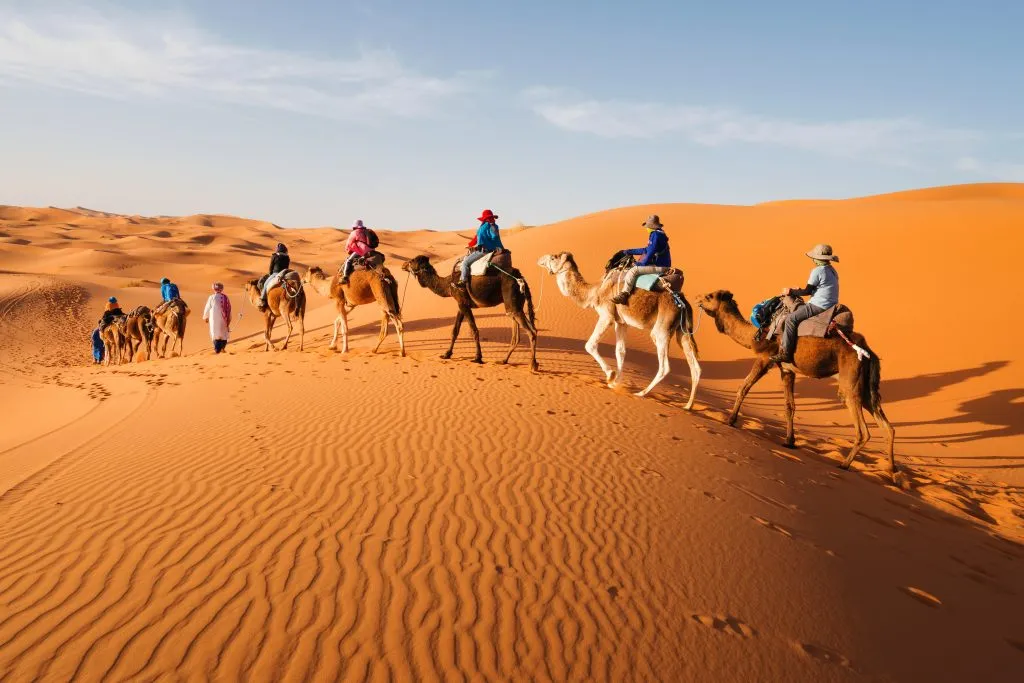
Arrival at the desert’s edge marks the transition to traditional transport. Camel caravans carry travelers into the dune fields, typically departing in late afternoon to reach camps by sunset. The camel trek itself, usually lasting one to two hours, provides perspective on how Berber nomads have crossed these landscapes for generations, though modern saddles offer considerably more comfort than historical alternatives.
Desert camps range dramatically in comfort levels and authenticity. Budget options provide basic Berber-style tents with shared facilities, mid-range camps offer private tents with better bedding and amenities, while luxury camps feature permanent structures with en-suite bathrooms, quality linens, and upscale dining. All share certain elements: traditional architecture, communal areas for dining and socializing, and positions within dune fields that maximize sunset and sunrise viewing.
Evening activities center around traditional tagine dinners prepared over open fires, followed by Berber music performances featuring drums, singing, and often invitations for guests to participate. The musical traditions shared around campfires connect contemporary travelers with centuries of nomadic culture, creating cross-cultural exchanges that transcend language barriers.
Stargazing constitutes one of the Sahara’s most extraordinary offerings. Far from light pollution, the night sky reveals itself with stunning clarity, the Milky Way arches visibly overhead, planets shine brilliantly, and meteor showers deliver regular spectacles. This celestial display often ranks among travelers’ most memorable experiences, providing perspective and wonder that urban life rarely permits.
Sunrise demands early waking but rewards effort magnificently. Climbing a nearby dune before dawn allows observation of the complete transformation as darkness gives way to soft pastels, then brilliant oranges and golds as the sun breaks the horizon. The low-angle light reveals every texture and pattern in the sand, creating photographers’ paradise.
Selecting Quality Desert Tours from Marrakech
The popularity of Marrakech desert tours has spawned hundreds of operators with wildly varying quality standards. Several factors distinguish excellent tours from disappointing experiences.
Transportation quality directly impacts comfort during long drives. Modern, well-maintained vehicles with functioning air conditioning, comfortable seating, and professional drivers prove essential. Some budget operators use overcrowded, poorly maintained vans that transform scenic journeys into endurance tests.
Group size affects experience quality significantly. Small groups of six to eight maximum allow for flexibility, ensure window seats for everyone, and facilitate meaningful interactions with guides. Large groups of fifteen or more create logistical challenges, reduce personalization, and often feel impersonal.
Guide expertise transforms tours from simple transportation into educational adventures. Knowledgeable guides share insights about Berber culture, explain geological formations, identify flora and fauna, and provide historical context that enriches every stop. Language skills matter, guides should speak your language fluently enough for detailed explanations rather than basic phrases.
Accommodation standards vary enormously between operators. Request specific information about camp facilities, tent quality, bedding standards, bathroom arrangements, and meal quality. Reviews from recent travelers provide realistic expectations beyond operators’ marketing claims.
Itinerary transparency indicates professionalism. Detailed schedules showing departure times, stops, included meals, activities, and accommodation details allow informed decisions. Vague itineraries with minimal information often hide quality compromises.
Price reflects value but shouldn’t be the sole decision factor. Extremely cheap tours invariably cut corners on critical elements: vehicle quality, guide expertise, accommodation standards, or meal quality. Mid-range tours often provide excellent value, while premium options justify higher costs through superior guides, exclusive camps, and comprehensive inclusions.
Practical Considerations and Preparation
Successful desert tours require modest preparation. Packing essentials include comfortable walking shoes, layered clothing for temperature fluctuations (desert nights can be surprisingly cold), sun protection, flashlights for nighttime navigation, and cameras with spare batteries. Lightweight scarves protect against sun and occasional sandstorms while serving practical and cultural purposes.
Physical requirements remain minimal for standard tours. Camel riding involves little exertion, walks are short and optional, and most activities suit various fitness levels. However, travelers should consider that desert camps feature basic facilities, medical services lie hours away, and the extensive driving might challenge those prone to motion sickness.
Timing significantly impacts desert experiences. Spring (March-May) and autumn (September-November) offer ideal conditions with moderate temperatures and comfortable camping weather. Summer brings extreme heat exceeding 40°C that many find uncomfortable, while winter provides excellent daytime weather but very cold nights requiring substantial warm clothing.
Dietary requirements typically accommodate vegetarian, vegan, and common allergies present no problems when communicated during booking. Traditional Moroccan cuisine naturally includes many plant-based options, making vegetarian requests particularly simple to fulfill.
Cultural Sensitivity and Sustainable Tourism
Desert tours provide opportunities for meaningful cultural exchange when approached respectfully. Berber communities welcome visitors but appreciate cultural sensitivity regarding photography, dress codes, and social customs. Always request permission before photographing people, dress modestly when visiting villages, and show genuine interest in cultural explanations rather than treating communities as tourist attractions.
Sustainable tourism practices matter increasingly as desert tour popularity grows. Choose operators demonstrating environmental responsibility through waste management, water conservation, and minimal-impact camping. Support guides and staff through appropriate tipping, and consider operators who invest in local communities through employment, education support, or infrastructure development.
Conclusion
Desert tour from marrakech open doors to experiences that define many travelers’ Moroccan journeys: the profound silence of endless dunes, the hospitality of Berber hosts, the brilliance of unpolluted night skies, and the sense of stepping outside modern time into landscapes and rhythms unchanged for millennia. Whether choosing quick Agafay escapes or comprehensive Sahara expeditions, these journeys deliver adventure, beauty, and cultural immersion that complement Marrakech’s urban intensity perfectly.
The key to exceptional desert tour experiences lies in matching tour duration and style to personal interests, selecting reputable operators who prioritize quality over profit maximization, and approaching the adventure with openness to experiences beyond comfort zones. The Sahara rewards those who embrace its challenges with memories and perspectives that endure long after desert sand has been shaken from luggage.
Key Takeaways
Geographic Understanding Matters The “desert tours from Marrakech” encompass multiple destinations Erg Chebbi near Merzouga for classic towering dunes, Erg Chigaga for remote wilderness, and Agafay for convenient proximity. Each offers distinct experiences requiring different time commitments and providing varying levels of authenticity and tourist development.
Duration Determines Experience Depth Two-day tours provide minimum viable Sahara exposure but involve extensive driving. Three-day tours balance travel and experience more comfortably. Four-plus day tours transform desert visits into comprehensive adventures with geographic diversity and cultural immersion that rushed trips cannot achieve.
Quality Operators Justify Premium Investment The cheapest Marrakech desert tours inevitably compromise on critical elements. Mid-range operators often deliver optimal value through reliable vehicles, knowledgeable guides, and comfortable camps without unnecessary luxury markups. Evaluate based on total value rather than bottom-line price alone.
Small Groups Enhance Experiences Tours limited to 6-8 participants maximum ensure window seats for everyone, allow itinerary flexibility, facilitate meaningful guide interactions, and create more intimate desert camp atmospheres compared to large groups that feel impersonal and logistically constrained.
Seasonal Timing Significantly Impacts Comfort Spring and autumn provide ideal desert touring conditions with moderate temperatures. Summer heat exceeds 40°C, making daytime activities uncomfortable for many travelers. Winter offers beautiful days but requires substantial warm clothing for freezing nights that surprise unprepared visitors.
Cultural Engagement Enriches Journeys Desert tours excel when travelers approach Berber culture with genuine curiosity and respect rather than treating communities as exotic backdrops. Meaningful exchanges around campfires, in villages, and with guides transform simple tourism into cross-cultural understanding that benefits both visitors and hosts.
