
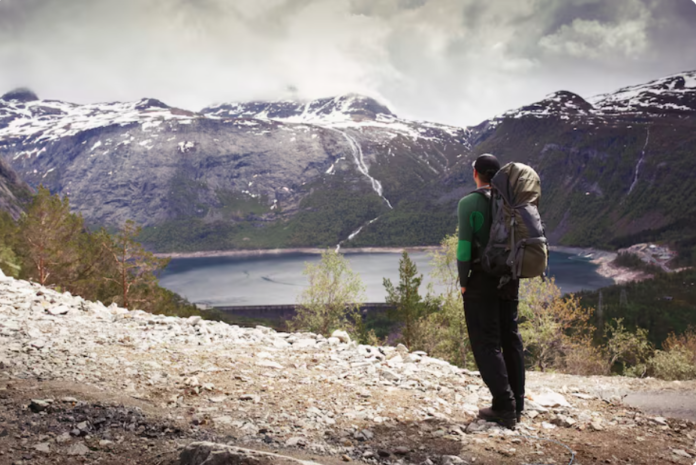
Walk into any gear shop or trekking forum and you’ll hear it: the numbers. “It goes to 4,130 meters.” “The pass is at 5,416.” Altitude becomes the headline, the bragging right, the singular measure of a trek’s challenge. But focusing solely on the highest point is like judging a novel only by its last page. The true story of a Himalayan journey – its rhythm, its difficulty, its soul is written in the winding narrative of the route itself. The path you take, more than any single number on a map, defines what your trek will actually feel like.
The Rhythm of the Climb: It’s in the Daily Profile
Two treks might finish at the same altitude, but how they get there creates entirely different experiences. This is the lesson of the daily profile. A relentless, steep ascent day after day is a grueling test of pure power. A route with varied stages, a tough climb followed by a gentle traverse, or a rest day built into a scenic village offers a rhythm. This rhythm allows your body to adapt, but just as importantly, it allows your mind to absorb the journey.
Consider the difference between a direct assault and a winding approach. The former is a constant upward battle, where fatigue accumulates and the scenery can blur into a tunnel of effort. The latter uses the landscape. It might take a longer path along a river valley, climb a ridge for a view, then descend slightly to sleep at a sensible altitude. This isn’t inefficiency; it’s intelligent pacing. The “rest” is woven into the walking itself. The trekker on this route might arrive at the high point just as strong, but far more connected to the journey that brought them there. They’ve had time to notice the changing forests, to speak with villagers, to feel the landscape evolve. The altitude is the destination, but the route is the voyage.
The Texture Underfoot: Trail Conditions Are the Unseen Variable
A route is not just a line on a map; it’s a physical surface your body negotiates for hours each day. This texture is a silent, constant factor that altitude figures completely ignore. Eight kilometers on a wide, well-maintained dirt trail is a different universe from eight kilometers on a narrow, rocky moraine or a steep, uneven staircase of ancient stones.
The Annapurna Base Camp trek, for instance, is famous for its stone staircases. You can be at a modest 2,500 meters, but a long descent on those stairs can fatigue your legs more than a thin-air climb on a smooth path. A route that traverses loose scree, demands careful river crossings, or follows exposed ledges demands a different kind of energy, mental focus and surefootedness. This is why a “moderate” trek can feel brutally hard if the trail condition is rough, and a “challenging” high-altitude route on a good path can feel surprisingly manageable. The ground beneath your feet tells its own story of effort, one that your knees and ankles remember long after your lungs have forgotten the thin air.
The Surrounding World: Isolation vs. Community
Finally, a route decides who you share your journey with. Some paths feel like main streets. You’re part of a steady stream of other hikers, the clinking bells of mule trains, and porters shuffling by with impossible loads. Other trails are whispers. You might walk for hours with no company but the wind and your own thoughts, the trail feeling like it was laid just for you. Neither is the ‘right’ way. They’re just different doors into the mountains, and they open onto completely different rooms.
Take a busy path, like the well-trodden way to Everest Base Camp. You’re never really alone. There’s a constant hum of shared purpose. At every teahouse, you swap stories with people from across the globe. The path is lined with places to rest, eat, and find help if you need it. There’s a real comfort in that. Your struggle is a common one, and there’s camaraderie in every shared cup of tea at the end of a long day.
Then there’s the quiet way. Think of the high, lonely trails of Upper Dolpo, where a single footprint in the dust might be the only sign of another person for miles. Here, the challenge changes. It’s less about the raw climb and more about your own quiet fortitude. You carry more of your world on your back. You make decisions based on the sky and the map, not the next village sign. The conversation isn’t with other trekkers; it’s with the vast, untamed landscape itself. It’s a deeper, more demanding kind of talk.
So your choice of trail is really a choice of companion. Do you want the cheerful, collective energy of the trekking highway, where the hardship is a group project? Or do you want the profound, silent dialogue with wilderness, where you discover what you’re made of when there’s no audience? The mountains offer both. You just have to pick which conversation you want to have.
Using the Full Picture to Plan
This is why a smart trekker looks beyond the summit altitude. They study the route’s daily elevation profile to understand the rhythm of effort. They research trail conditions to prepare their body and gear for the terrain. They consider the route’s character to know if they’re seeking a social journey or a solitary one.
For readers comparing short Himalayan treks, reviewing a full Annapurna Base Camp route outline can help clarify these very elements: the daily effort, the elevation changes, and the points of interest along the way. One such outline is available at https://www.glorioushimalaya.com/trekking-and-hiking/annapurna-base-camp-trek/
In the end, altitude is a fact. The route is the story. One gives you a statistic to share; the other gives you a collection of moments, challenges, and vistas that you’ll actually remember. The path you walk doesn’t just take you to the mountains. It teaches you how to be in them. Choosing a trek based on the route, not just the highest point, is the first step toward a journey that resonates long after you’ve descended.
