
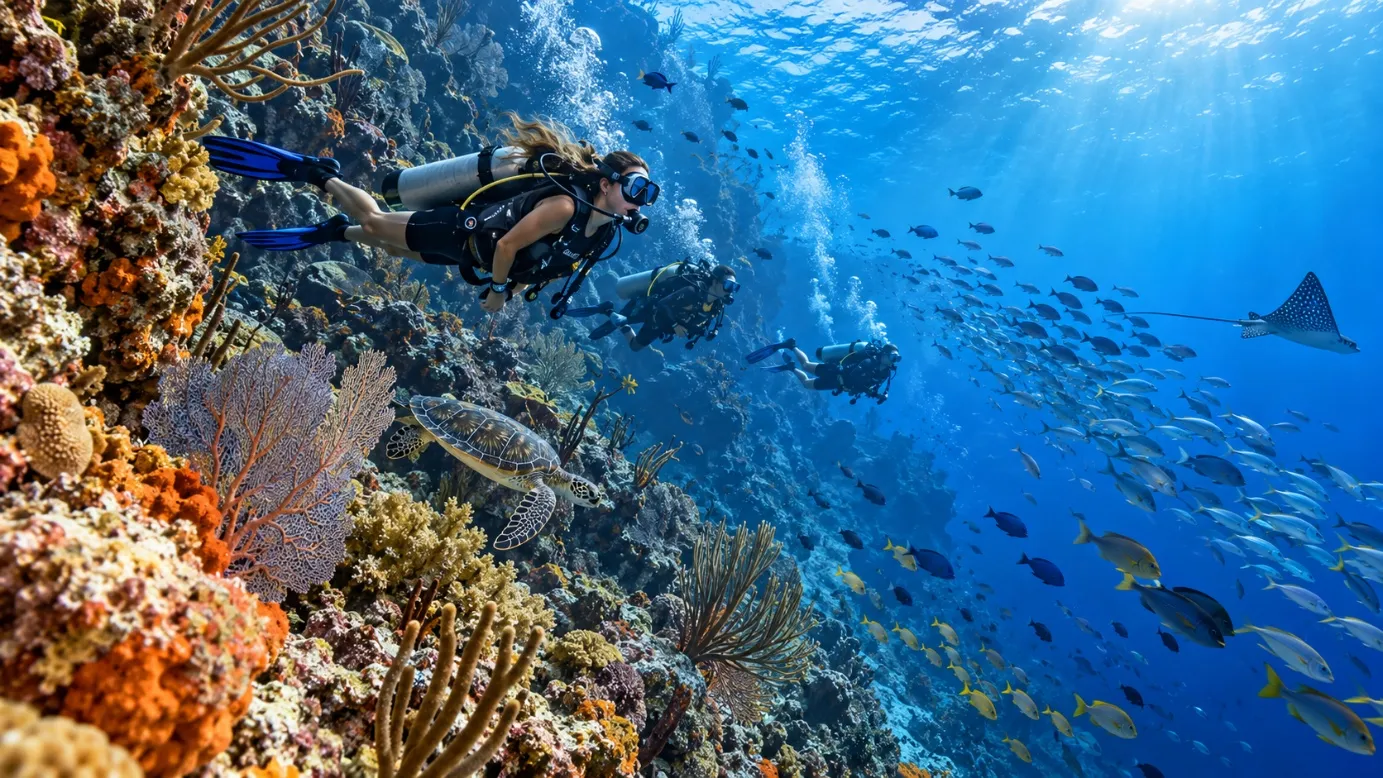
Ask experienced divers what sets this island apart, and many will describe floating along a wall without kicking. The current does the traveling while you simply watch the reef glide past like scenery from a train window, one coral head after another.
Understanding how that flow works makes every dive smoother and safer. Here is a closer look at the water, the skills and the habits that matter most when the ocean is doing half the work for you.
Why the Water Moves the Way It Does
The island sits in the path of the Yucatan Current, which flows north through the channel between the island and the mainland. Along the western side, that movement becomes a steady conveyor of nutrient-rich water that rarely stops, though its strength varies by site and day.
This flow feeds sponges, corals and fish, which explains the dense marine life along the walls. It also explains why operators plan every route around current direction and strength, choosing entry points that let the boat meet you at the finish.
Skills That Make Drifts Easy
Neutral buoyancy is the most valuable skill here. When you hover instead of sinking or rising, you move at the same speed as the water and use far less air, which means longer, calmer dives and more time to look around.
Practice small breath adjustments rather than constant inflator bursts. A relaxed diver conserves energy and notices more, including tiny creatures tucked into crevices. Keep your arms folded or clipped close, since flailing hands only add drag and tempt you toward the coral.
Reading the Reef as You Float
With Cozumel diving, the scenery changes constantly as you pass towering coral heads, swim-throughs and sloping walls. Keep your eyes moving between the reef and the open blue, because the best moments often appear from unexpected directions.
Eagle rays, turtles and groupers often cruise just beyond the wall. Scanning outward now and then rewards you with encounters that tunnel-visioned divers completely miss, and it helps you stay aware of your guide’s position as the group moves along.
Surface Markers and Boat Pickup
Because the boat follows your group from above, carrying a surface marker buoy is standard practice. Your guide releases it near the end of the dive so the captain can spot you easily, even when waves make heads hard to see.
Learn the deployment routine and keep a whistle within reach. Staying together as a group also lets the crew collect everyone quickly and safely, which matters most when the current is carrying you further than planned.
Habits That Keep You Comfortable
Check your gauge often, since drifting makes it easy to lose track of time and depth. Agree on turn pressures with your buddy before entering the water, and signal early if you feel your air dropping faster than expected.
Finish each dive with a slow ascent and a safety stop. Afterward, rest and rehydrate, because even effortless drifts can leave you more tired than you expect. A calm surface interval prepares you properly for the next tank.
Capturing Memories Without Losing Focus
Many divers bring cameras to record the drifting scenery, but filming should never replace awareness. Keep your gear simple and streamlined, and set up your settings on the boat so you can concentrate on the reef once you descend.
Remember that the current will not wait for the perfect shot. Take quick, steady images as the view passes, and enjoy the moment with your own eyes too, since memories made calmly are always sharper.
Gear Choices for Current Diving
Equipment that suits drift dives should be streamlined and secure. Tuck away dangling hoses, clip gauges close to your body, and wear a well-fitted wetsuit that does not balloon or flap as the water rushes past you.
A reliable dive computer is also essential, because depth can change gradually while you float along a sloping wall. Check your settings before every trip, and carry a spare mask so one small problem never ends a good day.
Conclusion
Drifting rewards patience, awareness and good habits. Master your buoyancy, respect the flow and let the reef set the rhythm of the day. The more you relax into the current, the more the underwater world seems to reveal itself.
If you are searching for operators, site breakdowns and practical trip advice, Cozumel Dive Hub brings the essentials together in one place. Armed with the right knowledge, you can float along those walls with real confidence.
