The Upper Mustang Trek takes you to one of the last places in the Himalayas that still feels truly untouched. Often called the “Last Forbidden Kingdom,” Upper Mustang was closed to foreigners until 1992. Even today, only a limited number of trekkers are allowed each year, which keeps the trails quiet and the culture almost exactly as it has been for hundreds of years. This trek is different from the popular Annapurna or Everest routes. Here you walk through a high desert of red rocks, visit ancient monasteries, and step inside a Tibetan Buddhist world that time forgot.
Why Upper Mustang Feels So Special
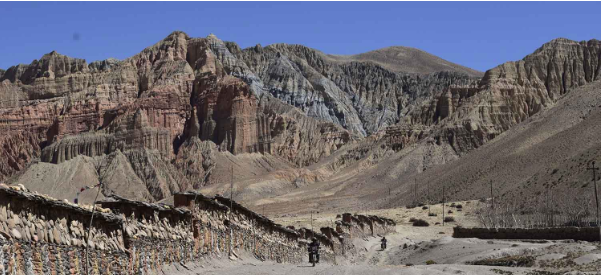
Upper Mustang lies north of the main Annapurna and Dhaulagiri ranges. The rain shadow created by these giant mountains keeps the area very dry. You will see wind-carved cliffs in shades of red, orange, and purple, deep erosion valleys, and fossil rocks that look like someone scattered seashells on the hillside. Villages are built from mud bricks and painted white, with flat roofs and colorful prayer flags. People still speak an old form of Tibetan and follow the traditions of Lo, the ancient kingdom whose capital was Lo Manthang.
Best Time to Trek Upper Mustang
The best months are April, May, September, and October. During these periods the weather is dry, the sky is clear, and the temperature is comfortable (5-20°C during the day). June to August is monsoon time in most of Nepal, but Upper Mustang gets almost no rain because of the rain shadow. Some people trek in summer to avoid crowds, but occasional landslides on the road to Jomsom can happen. Winter (December to February) is possible, but nights are very cold (-15°C or lower) and some teahouses close.
How Many Days Do You Need?
The classic Upper Mustang trek takes 14-18 days from Kathmandu and back, including the flight to Pokhara and Jomsom. A common 16-day itinerary looks like this:
- Day 1: Fly Kathmandu to Pokhara
- Day 2: Fly Pokhara to Jomsom (20 min) and drive/trek to Kagbeni
- Day 3: Kagbeni to Chele
- Day 4: Chele to Syangboche
- Day 5: Syangboche to Charang
- Day 6: Charang to Lo Manthang
- Day 7-8: Rest and explore Lo Manthang and nearby caves and villages
- Day 9: Lo Manthang to Dhakmar
- Day 10: Dhakmar to Samar
- Day 11: Samar to Chhusang
- Day 12: Chhusang to Muktinath
- Day 13: Muktinath to Jomsom
- Day 14: Fly Jomsom to Pokhara
- Day 15: Fly Pokhara to Kathmandu
You can shorten the trip by using jeeps on the first and last sections (Kagbeni to Lo Manthang and back), which saves 4-5 days of walking.
Permits and Costs (2025 prices)
Upper Mustang is a restricted area. You need two permits:
- Annapurna Conservation Area Permit (ACAP) – USD 30 per person
- Restricted Area Permit (Upper Mustang) – USD 500 for the first 10 days, then USD 50 per extra day
You must travel with a licensed guide and at least one other trekker (minimum group of two). Independent trekking is not allowed. A full package with a reputable agency usually costs between USD 2200 and USD 3200 per person for 16-18 days, including permits, domestic flights, guide, porter, food, and teahouse stays.
Difficulty Level
The Upper Mustang Trek is moderate. The highest point most people reach is 3840 m at Lo Manthang. Several passes are around 3900-4200 m, but none are technically hard. You walk 5-7 hours per day on dusty trails and jeep tracks. Strong winds in the afternoon are common, so most groups start early. Altitude sickness is rare because the ascent is gradual, but good acclimatization is still important.
Highlights of the Trek
- Lo Manthang Walled City The capital of the old kingdom, surrounded by a real mud wall with gates. Inside you find the king’s palace (the Raja of Mustang still lives there), three big monasteries (Jhampa, Thubchen, and Chhoede), and narrow lanes full of chortens and mani walls.
- Sky Caves of Chhosar Thousands of man-made caves dug into the cliffs hundreds of years ago. Some are 8-10 stories high and were used as homes, meditation places, or burial sites. The most famous is Jhong Cave near Chhusang.
- Muktinath Temple A sacred place for both Hindus and Buddhists at the end of the trek. The 108 water spouts and eternal flame are very special.
- Red Cliffs of Dhakmar One of the most beautiful days on the trail. The mountains turn bright red in the afternoon light.
- Ancient Monasteries Many gompas are 500-700 years old with amazing wall paintings that have never been restored with modern chemicals. Photography is sometimes allowed for a small donation.
- Tiji Festival (usually in May) A three-day masked dance festival in Lo Manthang to celebrate the victory of good over evil. If your dates match, it is one of the greatest cultural events in the Himalayas.
What to Pack
- Good windproof jacket and pants (afternoon wind is strong)
- Warm layers for night (fleece and down jacket)
- Sun hat, sunglasses, high SPF cream (UV is intense)
- Comfortable broken-in trekking shoes
- Sleeping bag (teahouses are basic and cold at night)
- Water purification tablets or filter
- Power bank (electricity is limited and expensive)
- Some snacks you like (chocolate, nuts)
- Small medical kit and any personal medicine
Accommodation and Food
Teahouses are simple but clean. Most rooms have two beds, a table, and shared bathroom outside. Hot shower costs extra (USD 3-5). Food is Nepali-Indian-Tibetan style: dal bhat (rice, lentils, vegetables), momos, thukpa (noodle soup), fried rice, and pasta. Meat is rare above Kagbeni because there is no refrigeration. Bring a metal plate and spoon if you want to reduce plastic waste.
Why You Should Do Upper Mustang Now
Every year the jeep road goes a little farther. In a few years you will be able to drive all the way to Lo Manthang in one long day from Pokhara. The trek will still be beautiful, but it will lose some of its magic when cars and motorbikes are common. Right now the trail is quiet, the villages are peaceful, and you feel like an explorer stepping into a lost world.
If you love culture more than high peaks, if you want to walk where very few people go, and if you dream of red desert mountains and ancient monasteries, Upper Mustang Trek is waiting for you. It is not the cheapest or easiest trek in Nepal, but almost everyone who finishes it says the same thing: it was worth every dollar and every dusty step.
