
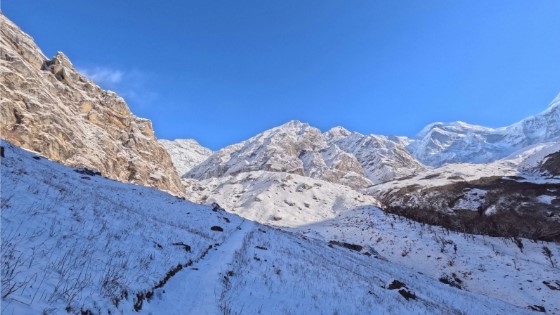
Tucked away in the shadow of the Annapurna massif, where ancient trails wind through cloud forests and prayer flags flutter against alpine winds, lies a trekking route that challenges everything travelers think they know about Nepal’s crowded mountain corridors. The Mardi Himal Trek represents a paradigm shift in Himalayan adventure, a pathway that somehow manages to deliver world-class mountain scenery, genuine cultural immersion, and that increasingly elusive quality of wilderness solitude, all within a timeframe that fits modern schedules without sacrificing authenticity or impact.
A Trail Forged by Time and Tradition
The story behind the Mardi Himal Trek reveals much about its unique character. Unlike the Everest Base Camp route, which was deliberately developed for tourism in the 1960s, or the Annapurna Circuit, which evolved from ancient trade routes, Mardi Himal existed for decades in a kind of limbo known to locals but invisible to the trekking industry. Shepherds used these paths seasonally, moving livestock to high pastures where summer grass grows lush and sweet. Hunters occasionally ventured here tracking elusive snow leopards and Himalayan tahr. Local shamans made pilgrimages to sacred sites where mountains pierce the sky and the boundaries between earth and heaven blur.
The trail’s official opening in 2012 emerged not from commercial imperatives but from a growing recognition that Nepal needed sustainable alternatives to its increasingly congested flagship routes. Environmental organizations, local communities, and government officials collaborated to develop infrastructure that could support trekkers while preserving the area’s essential wildness. The result is something rare in modern adventure travel: a route that feels discovered rather than developed, explored rather than packaged.
This genesis explains why the Mardi Himal Trek differs fundamentally from its famous neighbors. There’s no sense of walking a Himalayan highway where thousands have trod before. Instead, trekkers experience something closer to genuine exploration, following paths that still retain their original character and purpose.
The Geographical Poetry of Ascent
The brilliance of the Mardi Himal Trek lies in its geographical logic. Rather than following the typical pattern of ascending a river valley to reach mountain views, this route climbs a series of ridgelines that extend like fingers from the main Annapurna range. This ridge-walking approach creates constantly evolving perspectives where each turn reveals new angles on familiar peaks and previously hidden summits suddenly emerge into view.
The trek begins modestly in the Pokhara valley, where elevations hover around 800-1,000 meters and the climate feels subtropical. Within hours of starting, trekkers transition into a completely different world. The trail climbs through farming communities where stone-walled terraces cascade down impossibly steep slopes. These aren’t archaeological remnants but active agricultural systems maintained through backbreaking labor. Corn dries on rooftops, chili peppers add splashes of red to windowsills, and the rhythmic thud of dhikki (traditional grain pounding tools) provides a soundtrack to village life.
The middle sections penetrate extraordinary forests that rank among Nepal’s most beautiful. Between 2,000 and 3,000 meters, the route traverses dense stands of rhododendron, oak, maple, and magnolia. These forests possess an otherworldly quality massive trees twisted into fantastical shapes, branches laden with epiphytic plants, and a perpetual dimness created by overlapping canopies. During spring, when rhododendrons bloom in masses of crimson, pink, and white, these woodlands transform into something from mythology.
Above the tree line, the landscape becomes progressively more severe and magnificent. Vegetation retreats to scattered alpine shrubs, then disappears entirely. Rock, ice, and sky dominate. The high camps sit exposed on narrow ridges where wind sculpts clouds into transient sculptures and the curvature of the earth becomes perceptible in the distance. This is altitude’s domain a place where every breath requires conscious effort and the body’s every system works overtime to compensate for oxygen scarcity.
Mountains That Command Reverence
The Mardi Himal Trek’s reputation rests substantially on its extraordinary mountain views, particularly of Machapuchare, the sacred Fishtail Mountain. This 6,993-meter peak has never been climbed and never will be, protected by religious prohibitions that recognize certain summits as divine dwelling places beyond human ambition. From Mardi Himal’s vantage points, Machapuchare dominates with an almost oppressive presence, its sheer north face rising in a single sweep of ice-plastered rock that defies comprehension.
What makes these views exceptional isn’t just proximity though base camp sits remarkably close to these giants but perspective. The ridge-top positioning creates a panoramic sweep impossible from valley locations. To the north and east, the entire Annapurna range unfolds: Annapurna South (7,219m), Annapurna I (8,091m), Gangapurna (7,455m), and Annapurna III (7,555m). Hiunchuli (6,441m) rises to the west, while Mardi Himal itself (5,587m) provides the trek’s namesake. On exceptionally clear days, Dhaulagiri, the world’s seventh-highest peak, appears in the western distance.
The sunrise and sunset displays from High Camp have achieved near-legendary status among trekkers. As the sun’s angle changes, these peaks undergo chromatic transformations of orange alpenglow at dawn, deep blue shadows at midday, and rose-gold brilliance at dusk. Photography enthusiasts particularly prize these moments, though cameras inevitably fail to capture the emotional impact of witnessing such scenes firsthand.
The Human Landscape
Beyond natural spectacle, the Mardi Himal Trek offers profound human encounters. The Gurung communities along the route maintain cultural traditions that stretch back centuries while navigating the complexities of 21st-century life. Their villages represent remarkable achievements in mountain adaptation homes engineered to withstand earthquakes and monsoons, agricultural systems that coax productivity from vertical landscapes, and social structures that balance individual needs with communal survival.
Teahouse stays facilitate interactions that transcend typical tourist experiences. Evenings gather trekkers and lodge owners around communal stoves, where conversations flow over thermoses of milk tea. Lodge proprietors share stories about the dramatic changes they’ve witnessed improved transportation reducing isolation, educational opportunities drawing young people to cities, tourism providing alternatives to subsistence farming, and climate change altering weather patterns in disturbing ways.
These conversations reveal mountain communities caught between preservation and progress. Tourism brings welcome income but also threatens traditional lifestyles. Young people gain opportunities but villages lose their vitality as populations age. The conversations that emerge around evening fires aren’t scripted cultural performances but genuine exchanges between people navigating similar questions about authenticity, modernity, and meaning.
Strategic Considerations for Success
Completing the Mardi Himal Trek successfully requires more than physical fitness; it demands strategic planning and realistic self-assessment. The altitude profile presents the primary challenge. Ascending from 1,000 to 4,500 meters in just 4-5 days allows minimal acclimatization time. While most healthy trekkers manage this ascent profile without serious issues, individual responses to altitude vary unpredictably. Some people struggle at 3,000 meters while others remain comfortable at 5,000 meters.
Recognizing altitude sickness symptoms constitutes essential knowledge. Mild symptoms headache, slight nausea, sleep difficulty affect most people at altitude and usually resolve with rest and hydration. Severe symptoms confusion, difficulty walking, severe breathlessness at rest, persistent vomiting represent medical emergencies requiring immediate descent. The golden rule remains simple: never ascend with worsening symptoms, and always descend if serious symptoms develop.
Physical preparation should emphasize cardiovascular endurance and leg strength. The trek involves 5-7 hours of daily walking with significant elevation gain and loss. Training should include regular hiking with gradually increasing distances and elevations, ideally carrying a weighted pack to simulate actual trekking conditions. Stair climbing, cycling, and running all provide beneficial conditioning.
Gear selection makes a substantial difference in comfort and safety. The temperature range from warm valleys to freezing high camps demands versatile clothing systems. Layering remains the universal solution: moisture-wicking base layers, insulating mid-layers (fleece or down), and waterproof/windproof outer shells. Quality hiking boots prevent blisters and ankle injuries. Trekking poles reduce knee stress during descents by 20-30% according to research studies. A warm sleeping bag (rated to -10°C minimum) ensures comfortable rest in unheated rooms.
Timing and Seasonal Dynamics
Season selection profoundly influences the trekking experience. October and November represent optimal months, offering the Goldilocks combination of clear skies, comfortable temperatures, and stable weather. Post-monsoon clarity allows extended visibility on exceptional days, the Tibetan plateau becomes visible beyond the main Himalayan range. Daytime temperatures at middle elevations remain pleasant for walking while high camps experience cold but manageable nights.
Spring months March, April, and May provide compelling alternatives. Temperatures trend warmer than autumn, making high-altitude camping more comfortable. The rhododendron bloom cycle peaks during this period, transforming forests into botanical showpieces. However, spring brings more atmospheric moisture, creating afternoon clouds that can obscure mountain views. Weather stability decreases compared to autumn, with occasional pre-monsoon storms bringing snow or rain.
Winter trekking suits experienced, well-equipped adventurers. December through February delivers crystalline clarity and extreme solitude- sometimes entire days pass without encountering another trekker. However, temperatures plunge far below freezing at high camps, snow covers trails above 3,000 meters, and some teahouses close for the season. Winter trekking requires cold-weather gear, flexibility with itineraries, and acceptance that weather may force retreat.
Environmental Stewardship in Action
As visitor numbers grow, environmental consciousness becomes increasingly critical. The Annapurna Conservation Area represents one of Nepal’s most significant protected areas, supporting endangered species like snow leopards and red pandas while preserving ecosystems threatened throughout the Himalayas. Trekker behavior directly impacts conservation success.
Responsible trekking practices include carrying out all non-biodegradable waste, using refillable water bottles with purification systems rather than purchasing plastic bottles, staying on established trails to prevent erosion, and respecting wildlife by maintaining distance and avoiding feeding. Many trekkers participate in trail cleanup initiatives, carrying extra trash bags to remove litter left by less conscientious visitors.
Supporting local economies through thoughtful spending amplifies positive impacts. Purchasing meals and accommodation from locally-owned teahouses rather than larger operations keeps money within communities. Buying handicrafts directly from artisans ensures fair compensation. Hiring local guides and porters provides employment that offers alternatives to more environmentally destructive livelihoods.
Conclusion: Key Takeaways
The Mardi Himal Trek stands as one of Nepal’s most compelling trekking options, offering exceptional value across multiple dimensions:
Accessibility meets adventure: The 5-7 day duration fits constrained schedules while delivering authentic high-altitude Himalayan experiences up to 4,500 meters, proving that memorable mountain journeys needn’t require month-long commitments.
Spectacular yet intimate perspectives: The route provides arguably the finest close-range views of Machapuchare and the Annapurna range available from any accessible trek, with particularly stunning vistas from High Camp and Base Camp that create lasting emotional impacts.
Wilderness character in a developed region: Despite lying within the heavily-visited Annapurna Conservation Area, the trek maintains a genuine sense of remoteness and discovery increasingly rare on popular routes, offering solitude seekers respite from crowded trails.
Cultural depth beyond sightseeing: Interactions with Gurung communities in working villages provide meaningful cultural exchanges rather than performative tourism, revealing the realities of contemporary mountain life.
Moderate difficulty with proper preparation: While reaching significant altitude, the trek requires no technical skills, making it achievable for fit individuals who prepare adequately and respect altitude’s demands.
Optimal timing is crucial: Autumn (October-November) offers the most reliable conditions, though spring brings its own rewards with rhododendron blooms and comfortable temperatures.
Current moment presents opportunity: As word spreads, the trail’s character will inevitably change now represents the ideal time to experience Mardi Himal while it retains its relatively undiscovered atmosphere.
For those seeking mountains that inspire rather than intimidate, wilderness that feels genuine rather than curated, and experiences that resonate deeply rather than merely photograph well, the Mardi Himal Trek delivers comprehensively. It proves that even in well-traveled Nepal, extraordinary discoveries await those willing to venture beyond the obvious choices.
